Zermatt Ski Pass Guide: Which Lift Pass Do You Need?
Buying a ski pass in Zermatt sounds straightforward until you actually look at the options. There is the standard Zermatt pass, an International pass that includes Cervinia and Valtournenche in Italy, a Beginner ski pass, several Flex passes, an afternoon option and separate sightseeing tickets for people who are not skiing at all.
Then there is dynamic pricing, which means the amount you pay can change depending on when you book.
The good news is that choosing the right Zermatt ski pass becomes much easier once you know what kind of skiing you actually plan to do.
This guide breaks down the main options so you can buy the Zermatt lift pass that suits your holiday without paying for mountain access you are unlikely to use.
The Main Choice: Zermatt or International?

For most skiers, the first decision is between the regular Zermatt ski pass and the Zermatt International Ski Pass.
The standard Zermatt pass covers up to 200 kilometres of pistes across the Swiss side, including Sunnegga-Rothorn, Gornergrat and Schwarzsee-Matterhorn Glacier Paradise. The International option adds approximately 160 kilometres in Breuil-Cervinia and Valtournenche on the Italian side.
That means the International pass gives you access to the complete cross-border Matterhorn Ski Paradise.
It sounds like the obvious choice, but bigger is not automatically better.
If you are visiting for two or three days, learning to ski, or know you want to spend the entire trip exploring Zermatt, the Swiss-only pass may be more than enough.
If skiing into Italy is one of the experiences you have specifically come for, the International pass makes much more sense.
1. Standard Zermatt Ski Pass: Best for Most First-Time Visitors
The regular Zermatt ski pass is the simplest option for anyone planning to ski exclusively on the Swiss side.
It gives access to Zermatt's main ski sectors, allowing you to move between the sunny slopes around Sunnegga and Rothorn, the wide pistes around Gornergrat and Riffelberg, and the higher terrain towards Schwarzsee and Matterhorn Glacier Paradise.
For many guests, particularly on a shorter trip, that is already more terrain than they will realistically explore.
The standard pass suits:
Skiers visiting Zermatt for the first time
Beginners progressing beyond the nursery slopes
Intermediate skiers who are happy staying in Switzerland
Short ski breaks
Anyone who does not plan to cross into Cervinia
If you are still getting familiar with the layout, our ultimate guide to skiing in Zermatt is a useful introduction to the different ski sectors and how the terrain changes across the resort.
Top tip: Do not buy the International pass simply because it covers more pistes. Think about how many days you have and whether crossing into Italy is genuinely part of the plan.
2. International Ski Pass: Best if You Want to Ski to Cervinia
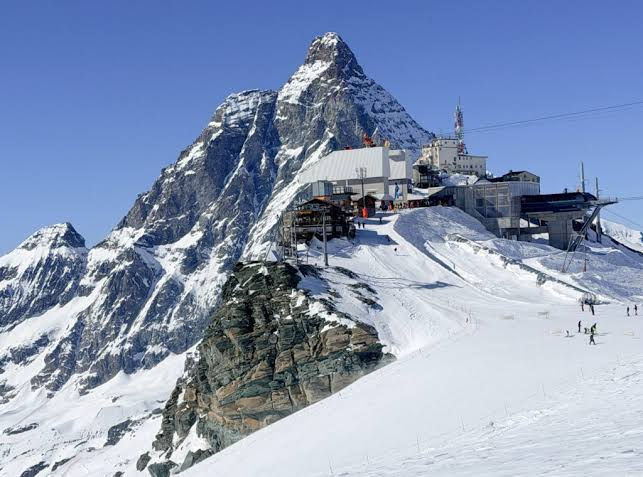
For confident skiers, the international option is one of the things that makes Zermatt particularly special.
The Zermatt International Ski Pass includes the Swiss ski area plus Breuil-Cervinia and Valtournenche, allowing you to cross the border on skis when the international lifts and pistes are operating.
For winter 2026/27, official starting prices show the International pass costing more than the Zermatt-only product. For example, one-day passes start from CHF 104 internationally versus CHF 89 for Zermatt, while five-day passes start from CHF 372 versus CHF 329. These are from prices, not fixed prices.
Is the upgrade worth it?
Usually, yes, if you know you want to ski in Italy.
A Cervinia day gives you long, open pistes, another perspective of the Matterhorn and the chance to build an Italian mountain lunch into the day.
But if you are a complete beginner or only skiing for a couple of days, you may never use the additional terrain.
The international option suits:
Confident intermediates and advanced skiers
Guests staying long enough to explore both countries
Skiers specifically planning a Cervinia day
Groups who enjoy covering large distances
A Zermatt ski resort guide can also help make sense of the cross-border ski area, especially for first-time visitors who want to spend the day skiing rather than repeatedly checking the piste map.
3. Beginner Ski Pass Zermatt: Best When You Are Just Starting
Complete beginners do not necessarily need a full-area pass on their first day.
The Beginner ski pass Zermatt gives access to the Sunnegga-Blauherd beginner area, including the Sunnegga funicular, Sunnegga-Blauherd lift, Leisee Shuttle, Eisfluh chairlift, Findeln chairlift and Wolli's Beginners Park.
For winter 2026/27, it is available for one to six consecutive days.
This is a very useful option because early ski lessons tend to take place in a relatively small area.
If you are still learning how to stop, control speed and link basic turns, there is little benefit in paying for access to the entire mountain.
The beginner pass is best for:
Complete first-time skiers
Nervous skiers returning after a long break
Children beginning lessons
Adults who expect to spend several days building confidence around Sunnegga
Once you can comfortably control your speed, use lifts independently and ski suitable blue pistes in control, a full Zermatt pass becomes more worthwhile.
If you are unsure how quickly that progression is likely to happen, your instructor can help. Our private ski lessons are tailored to ability, which also makes it easier to decide when you are ready to explore more of the resort.
Top tip: Do not treat upgrading to a full pass as a deadline. Moving onto a bigger mountain before you are comfortable rarely makes learning faster.
4. Flex Ski Pass Zermatt: Best if You Want Rest Days
Not everyone wants to ski six days in a row. For families, mixed-interest groups and guests who like leaving space for weather or recovery, the Flex ski pass Zermatt can make much more sense.
Current Flex options include:
2 ski days within 4 days
3 within 5
4 within 6
5 within 7
6 within 8
5 days across the season
Both Zermatt-only and International Flex versions are available.
This gives you freedom to wake up, look at the mountain and decide whether that day is for skiing.
Perhaps the weather is poor and you would rather spend the afternoon in the spa. Maybe the children need a day off. Or perhaps you have booked a winter hike, long lunch or another activity halfway through the holiday.
A Flex pass means that rest day does not have to feel like a wasted ski-pass day.
It works particularly well for a Zermatt ski holiday where skiing is important but is not the only reason for travelling.
5. Afternoon Ski Pass: Useful for Arrival Day
If you arrive in Zermatt early enough and cannot resist getting onto the mountain, there is also a half-day afternoon ski option. For winter 2026/27, the Zermatt afternoon pass is available from 12:10pm on the day of validity and excludes Matterhorn Glacier Paradise.
This can be useful if you arrive around lunchtime, already have equipment organised and want a few relaxed runs rather than losing the entire first day. But think carefully about whether it is actually worth rushing.
After travelling, checking into the hotel and collecting rental equipment, many guests are better off settling into the village and starting properly the following morning.
A ski holiday does not have to begin with a sprint to the lift.
What About Non-Skiers?

If someone in the group wants to use the mountain lifts but does not ski, they should not automatically buy a ski pass.
Zermatt offers sightseeing products including the Peak Pass, which is designed for pedestrians rather than skiers. It includes unlimited travel on several major mountain lift and railway routes, including access towards Matterhorn Glacier Paradise, Rothorn and Gornergrat, depending on the operating timetable. It is explicitly not valid for skiing. There are also specific excursion tickets such as Peak2Peak for visitors who want to combine Matterhorn Glacier Paradise and Gornergrat in one sightseeing day.
This is particularly useful for mixed groups.
A non-skier can meet the rest of the party for a mountain lunch or enjoy viewpoints without paying for a product designed around pistes and ski lifts they will never use.
How Do Zermatt Ski Pass Prices Work?
One of the most important things to understand about Zermatt ski pass prices is that many of them are dynamic.
The official price tables therefore use the words “from CHF” rather than giving one fixed price for the whole winter.
Zermatt Bergbahnen explains that ski-pass prices can change according to factors including demand, bookings and the weather forecast. Buying earlier generally gives you the best chance of securing the lower price.
The same price model applies whether you buy online or in advance at a sales point, so the advantage is really about when you purchase rather than simply buying on the website.
For the 2026/27 winter season, advertised starting prices include:
Zermatt 1 day: from CHF 89
International 1 day: from CHF 104
Zermatt 3 days: from CHF 209
International 3 days: from CHF 232
Zermatt 5 days: from CHF 329
International 5 days: from CHF 372
These figures should be treated as a guide only. Check the official calculator for your exact dates before budgeting.
If you are comparing the wider cost of your trip, this guide to how expensive Zermatt can be also looks at accommodation, peak dates and other major holiday expenses.
Are There Discounts for Children and Families?

Yes. For current winter products, children aged 9 to 15.99 receive a 50% reduction, while youths aged 16 to 19.99 receive 15% off ski passes. Children under nine can access skiing free through the Wolli Card, subject to the relevant conditions. Zermatt also currently offers free Saturday skiing for children under 16.
These discounts can make a significant difference for families, particularly over a longer stay. Always enter the correct ages when checking prices, and carry official identification where required.
Should You Buy Your Ski Pass Before Arriving?
Usually, yes.
The dynamic pricing model rewards earlier booking, and organising passes before the first ski morning removes another job from an already busy start to the day.
That said, make sure you understand what you are buying first.
A beginner does not need an International pass because everyone else in the hotel seems to have one. A family planning two rest days may be better suited to a Flex product than six consecutive ski days.
The cheapest pass is not necessarily the best value, and the biggest pass is not necessarily the right one.
If you are arranging a tailored Zermatt holiday, lift passes can also be considered alongside equipment, guiding, transfers and the rest of the trip rather than organised as a separate last-minute purchase.
Make Your First Ski Morning Easier
The Matterhorn Ski Paradise is enormous, but your lift-pass decision does not need to be complicated.
Start with your ability level. Then consider how many days you genuinely want to ski, whether Italy is part of the plan and whether you want flexibility for rest days or other activities.
Once those decisions are clear, the right pass usually becomes obvious.
We help guests organise the details around their time in Zermatt, from lift passes and equipment to lessons, guiding, restaurants and complete holiday planning.
If you are putting together your Zermatt ski holiday and want help choosing the right setup, get in touch with us at The Mountain Company for local advice and a trip shaped around how you actually want to spend your time in the mountains.


