Can Beginners Ski in Zermatt? A First-Timer’s Guide
Yes, beginners can ski in Zermatt.
The resort may be known for high mountains, long descents and an international connection to Italy, but complete beginners do not need to tackle any of that on their first day.
Zermatt skiing for beginners starts in a much smaller part of the mountain.
Wolli’s Beginners Park at Sunnegga provides dedicated learning terrain, and the surrounding Sunnegga–Blauherd area gives progressing skiers access to blue pistes once stopping and turning become reliable. The resort also offers a separate beginner ski pass, so there is no need to buy access to the whole ski area immediately.
The important part is knowing when to move on. A first-time skier who learns patiently on appropriate terrain will usually have a better experience than someone who follows more experienced friends onto a difficult piste too early.
Is Zermatt Good for Complete Beginners?

Zermatt can work very well for complete beginners when the first days are planned around learning rather than exploring the full resort.
A piste map can look intimidating. Matterhorn Ski Paradise covers hundreds of kilometres across Switzerland and Italy, with terrain reaching high into the mountains. None of that needs to matter during the first lesson.
A complete beginner has a much simpler set of priorities:
Learn how the equipment feels.
Balance while sliding.
Control speed.
Stop deliberately.
Turn in both directions.
Use basic lifts safely.
Learn how to behave around other skiers.
Those skills are easier to develop on gentle, predictable terrain.
The mistake is assuming that a famous ski resort needs to be experienced all at once. For Zermatt for first time skiers, a successful first morning may involve only one small learning area and several repetitions of the same basic movement.
That is enough.
Where Should Beginners Start in Zermatt?
For most complete beginners, the clearest starting point is Wolli’s Beginners Park near Leisee on the Sunnegga side of the mountain.
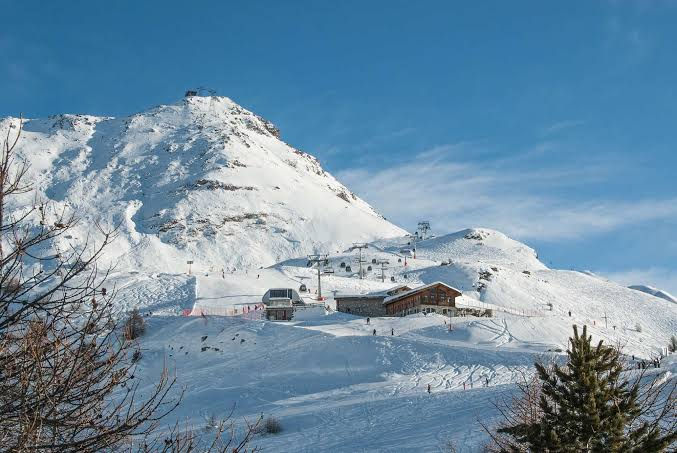
The park is sheltered, sunny and designed specifically for learners. The current setup includes five magic carpets, allowing beginners to practise without immediately needing to manage a chairlift or drag lift. It is reached from Sunnegga using the self-service Leisee Shuttle.
Getting there is relatively easy. Skiers travel from the village to Sunnegga on the underground funicular, then continue to the beginner area.
This matters because the journey to the first lesson should not create more difficulty than the skiing itself.
At Wolli Park, a beginner can practise short movements repeatedly. There is less reason to worry about reaching the next lift, choosing the correct piste or keeping up with a group heading somewhere else.
For children, nervous adults and anyone who has never worn ski boots before, that controlled environment is particularly useful.
How Does the Zermatt Beginner Ski Pass Work?
One of the most useful parts of beginner skiing in Zermatt is the dedicated beginner ticket.
For winter 2026/27, the official Beginners Ski Pass provides access to the Sunnegga–Blauherd beginner area and is available for one to six consecutive days. It includes the Sunnegga funicular, Sunnegga–Blauherd lift, Leisee Shuttle, Eisfluh chairlift, Findeln chairlift, Wolli’s Beginners Park and the local bus.
A one-day pass currently starts from CHF 60 for selected dates, with pricing varying by period. Check the current Zermatt beginner ski pass before travelling rather than relying on a previous season’s price.
For a true first-timer, there is little reason to pay for the international ski area on day one. The beginner ticket lets the skier concentrate on the terrain they can realistically use. If progress is faster than expected, the lift-pass options can be reviewed for later days.
We have our guide to planning the cost of a Zermatt holiday, where it can make a noticeable difference for someone who only needs the first learning area.
What Will You Learn in Your First Ski Lesson?

The first lesson is not about reaching a particular piste colour. The instructor normally needs to build control in a sensible order. A first session may cover:
How ski boots and bindings work.
How to carry and put on skis.
Balance and basic stance.
Moving on flat snow.
Gliding in control.
Slowing down and stopping.
Beginning to change direction.
Linking simple turns.
Getting up after a fall.
Using a magic carpet or another appropriate lift.
Basic piste awareness.
Progress varies considerably. One person may link turns during the first morning while another needs more time simply becoming comfortable with sliding.
Neither result determines whether skiing is going well. The useful measure is whether the skier can repeat a movement with increasing control.
Our private ski lessons in Zermatt are tailored around individual goals and current ability. Current options include three-hour morning or afternoon sessions and full-day tuition, with dedicated formats for first-time and nervous skiers, children and families.
When Are You Ready to Leave Wolli’s Beginners Park?
Leaving the learning area should be a skill decision, not a timetable decision. A skier is beginning to become ready for longer beginner slopes in Zermatt when they can:
Link several turns without constant assistance.
Control speed through those turns.
Stop at a chosen point.
Start again safely after stopping.
Look uphill before moving across the piste.
Remain in control when another skier passes nearby.
Use the next required lift with reasonable confidence.
Being able to stop once is not the same as being able to stop reliably. The same applies to turning. A skier who turns comfortably to the left but struggles to turn right may need more repetition before entering a busier piste.
Fatigue matters too. Someone may have the technical ability to leave the learning area at 10:30 but no longer have the same control at 14:30. Moving back to easier terrain is often the better decision.
Where Can Beginners Ski After Wolli Park?
The next stage normally remains on the Sunnegga side.

The beginner pass specifically includes the Sunnegga–Blauherd area and its blue runs, together with Eisfluh and Findeln lift access. This allows a learner to progress beyond Wolli Park without immediately needing the full Zermatt ski domain.
The transition should still be gradual.
A normal blue piste can feel very different from a beginner park. Runs are longer, other skiers may travel faster, gradients may change, and stopping areas are less controlled.
An instructor may choose only one suitable section, repeat it several times and then decide whether to continue.
Once blue-piste skiing is reliable, other parts of Zermatt can gradually become appropriate. There is no benefit in rushing towards red terrain simply because someone has booked a week-long ski holiday.
For a broader explanation of how piste grades work, see The Ultimate Guide to Skiing in Zermatt.
What Should First-Time Skiers Avoid in Zermatt?
The biggest beginner mistakes usually come from choosing terrain around the group rather than the learner.
1. Do not follow experienced friends onto a red piste
A stronger skier may describe a run as “easy”, but they are judging it from their own experience. If stopping and turning are still developing, a steeper piste can quickly create too much speed.
2. Do not make the Matterhorn Glacier Paradise the first-day objective
The highest and most famous part of the resort is not automatically the most useful place to learn. A beginner gains more from appropriate terrain than from travelling to the highest possible elevation.
3. Do not plan an Italy day too early
Skiing to Cervinia involves distance, several lift connections and enough ability to manage the route throughout the day. It is an objective for skiers who can already travel independently on suitable terrain, not someone still working on basic turns.
4. Do not practise until technique disappears
Learning while exhausted often leads to defensive movements. Cold feet, heavy legs and reduced concentration can make an easy slope feel difficult. Finish while the skier still has some control left.
Should Beginners Ski Back to Zermatt Village?

Not necessarily.
A first-time skier does not need to prove anything by skiing all the way back to the village.
One of the most practical beginner habits is knowing when to download by lift or railway instead of forcing a final descent. Current competitor guidance also highlights this as an important issue for first-timers because the last route towards the village may be less appropriate than the learning terrain used during the day.
If you have been learning around Sunnegga, returning on the funicular can be the sensible choice.
This becomes even more important late in the day. Snow conditions can change, pistes can become busier or scraped, and tired legs reduce control. A successful beginner's day should finish with enough confidence to want to return tomorrow.
Do Beginners Need Ski Lessons in Zermatt?
You can theoretically learn basic skiing from an experienced friend, but there are several reasons professional ski lessons in Zermatt can make the first days easier.
A qualified instructor can identify suitable terrain, teach movements in a logical order and recognise when the skier is ready to progress. They also remove an awkward dynamic that often develops between friends or couples.
A confident skier may know how to ski very well without knowing how to explain the movement. They may also underestimate how steep, fast or confusing a piste feels to someone who has never skied.
Professional instruction provides a separate learning relationship.
For nervous skiers, the instructor can also change the pace before fear becomes the main problem. Our team’s private lesson service includes a supportive three-hour session aimed specifically at beginners and people returning after a long break. The guide to how private ski lessons can build confidence explains this in more detail.
Private or Group Lessons: Which Is Better?
Both formats can work. The official Zermatt Tourism directory lists both private and group ski-school options for different ages and levels.

Group lessons can suit:
Sociable learners.
Children who enjoy learning with other children.
Guests who want several sessions at a lower individual cost.
Skiers comfortably progressed at the group's pace.
Private ski lessons in Zermatt may make more sense when:
You are particularly nervous.
You have limited ski days.
A child needs individual attention.
Several family members want to learn together.
You have had a difficult previous skiing experience.
You want flexible meeting arrangements.
One specific skill is slowing your progress.
Private instruction does not guarantee faster progress. Its advantage is that the pace, exercises and terrain can be changed around the individual instead of the wider group.
What Should You Organise Before the First Morning?
Learning becomes harder when the lesson starts with equipment or ticket problems. Ideally, organise the main practical details before the first session. Check:
Where you are meeting the instructor.
What time do you need to leave the hotel.
Whether equipment should be collected the evening before.
Which ski pass the instructor recommends.
Those ski boots fit firmly without causing significant pain.
Do not wear several pairs of ski socks to make a loose boot tighter. Properly fitted equipment matters more than adding layers inside the boot. It is also worth checking the official live lift and piste information before leaving, particularly when weather may affect mountain operations.
A Realistic Three-Day Plan for a First-Time Skier
Progress cannot be guaranteed by the day, but a simple structure helps set realistic expectations.
Day 1: Learn control
Spend the session on dedicated beginner terrain. Work on balance, stopping, turning and basic lift use. Repeat rather than chase distance. If the skier is tired after the lesson, stop or practise only briefly.
Day 2: Make the movements reliable
Return to familiar terrain first. Once turning and stopping feel consistent, the instructor may introduce a longer beginner piste. The aim is to manage the new environment without losing the technique learned on day one.
Day 3: Begin skiing more independently
A progressing beginner may start linking several blue runs or learning a slightly wider section of the Sunnegga area. This does not mean every beginner will reach this point in three days. Some will progress faster and others will need longer.
The better question is not how many days have I skied?
Ask what can I now do reliably without being rescued by the slope, the instructor or another skier?
When Does a Beginner Need a Guide Instead of a Lesson?
Usually, they do not.
Someone still learning to stop, turn or use lifts needs instruction. A Zermatt ski guide becomes more useful later, when the skier can already travel independently but does not know the resort.
For example, a progressing skier may eventually become comfortable on blue and suitable red pistes but still feel uncertain about which mountain sector to choose, how lifts connect or which routes are sensible in current conditions.
That is where Zermatt ski resort guiding becomes more relevant. Our current resort-guiding options include first-day orientation and mountain navigation for guests who already have enough skiing ability to explore.
For a complete beginner, however, technique and control should come first.
Start Small and Let the Mountain Get Bigger
So, can beginners ski in Zermatt? Absolutely, provided the ski holiday begins with terrain suited to the skier rather than the reputation of the resort.
Start at Wolli’s Beginners Park. Use the beginner pass while that is all the terrain you need. Build stopping and turning until they are reliable, then move gradually onto longer blue pistes.
For some people, that progression happens quickly. Others need more repetition, particularly if fear, fatigue or previous experiences affect confidence. The important thing is that each step remains manageable enough for useful techniques to develop.
Planning a first ski holiday or wondering how much instruction your group will need? Contact our team, The Mountain Company with your dates, ages and previous skiing experience, and the team can help you choose a private lesson format and starting plan that suits your first days in Zermatt.


