Best Ski Areas in Zermatt: Sunnegga, Gornergrat and Glacier Paradise Explained
A Zermatt piste map can look complicated on the first morning. The resort spreads across several mountain sectors, uses three different main access points from the village, and connects with Cervinia and Valtournenche in Italy.
In practice, skiing in Zermatt becomes easier once you think of the Swiss side as three main areas: Sunnegga–Rothorn, Gornergrat, and Schwarzsee–Matterhorn Glacier Paradise. The current Zermatt ski pass covers up to 200 kilometres of Swiss pistes across these areas, while the international pass adds up to 160 kilometres around Breuil-Cervinia and Valtournenche.
The best ski areas in Zermatt therefore depend less on finding one winner and more on matching the mountain to your ability, conditions and plans for the day.
How Are the Zermatt Ski Areas Divided?

The three main Swiss sectors are:
Ski area | Main access from Zermatt | Often suits |
Sunnegga–Rothorn | Underground Sunnegga funicular | Beginners, intermediates, families, food-focused days |
Gornergrat | Gornergrat Railway | Intermediates, families, mixed groups, scenic skiing |
Matterhorn Glacier Paradise | Matterhorn Express via Furi and Trockener Steg | Confident intermediates, advanced skiers, Italy days |
These areas are connected to the mountain, so a confident skier does not need to return to the village every time they want to change sectors.
The important point for Zermatt skiing for first timers is that you do not need to understand the entire network on day one. Choosing one appropriate area and learning how it works is often more useful than trying to cross the whole resort immediately.
For a broader introduction to the mountain, the Ultimate Guide to Skiing in Zermatt covers piste grades, equipment and other practical details.
Sunnegga–Rothorn: Best for Easy Access, Progression and Lunches
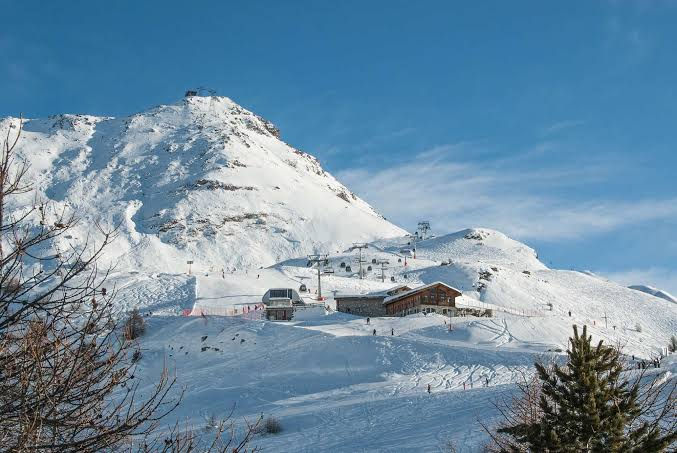
Sunnegga skiing begins with one of the quickest mountain journeys in Zermatt. The underground funicular reaches Sunnegga at 2,288 metres in around 4.5 minutes from the village.
That makes the area useful when a group wants to start skiing without a long sequence of gondolas.
For complete beginners, Wolli's Beginners Park is located below Sunnegga and provides dedicated learning terrain. The wider Sunnegga–Blauherd–Rothorn sector then gives progressing skiers room to move onto longer pistes as their control improves.
Intermediates have considerably more to explore higher on the mountain. Runs around Blauherd and Rothorn provide a mixture of cruising and more demanding terrain, while the sector allows relatively easy laps without requiring the group to cross the entire resort.
Sunnegga also works particularly well when lunch is part of the plan.
Feel free to check our guide for the best restaurants in Zermatt including options such as Chez Vrony and Findlerhof in this part of the mountain.
When should you choose Sunnegga?
Sunnegga is worth considering when:
Someone in the group is learning to ski.
You want an uncomplicated first morning.
The group includes progressing blue and red-piste skiers.
A Findeln lunch is important.
You want to explore one area properly rather than cover maximum distance.
It should not automatically be treated as the “easy mountain”. There is challenging terrain higher in the sector, and piste difficulty still needs to match the skier.
Gornergrat: Best for Scenic Skiing and Mixed Groups

Gornergrat skiing has a different rhythm because the mountain can be accessed by the Gornergrat Railway from opposite Zermatt's main railway station.
The train is useful for skiers, but it also makes the area particularly practical when a group includes non-skiers. Family members can travel uphill independently and meet skiers around stations such as Riffelberg or Riffelalp without needing to use a sequence of ski lifts.
The Gornergrat area includes blue and red terrain between Gornergrat and Riffelberg, and the railway itself is included in the standard Zermatt ski area when using the appropriate ski pass.
For intermediates, this can be a good sector for building mileage without making navigation the main challenge. The broad mountain landscape also provides several options for repeating runs or changing the route as the group settles into the day.
Gornergrat can work especially well for:
Families whose members do not all ski.
Confident beginners progressing onto longer pistes.
Intermediate skiers who want scenic cruising.
Groups that want an easy lunch meeting point.
Skiers who prefer the option of using the train for part of the journey.
The railway also provides a useful alternative when tired legs make another descent unnecessary. That matters more than it may appear during a ski holiday. Trying to force one final run because everyone believes they “should ski down” can turn a good day into an uncomfortable finish.
Matterhorn Glacier Paradise: Best for High-Altitude Skiing and Italy

Matterhorn Glacier Paradise skiing feels noticeably more high alpine.
The route begins from the Matterhorn Express side of Zermatt and climbs through the Furi and Trockener Steg area towards Klein Matterhorn. Matterhorn Glacier Paradise itself sits at 3,883 metres and has Europe's highest mountain station.
For skiers, the important point is not simply the altitude. This side offers access to extensive high-mountain pistes and a connection to Testa Grigia and the Italian ski area.
That makes it a natural choice for confident intermediates and advanced skiers planning longer days.
An Italy day is one of the most popular reasons for choosing this sector. With the correct international pass and operating connections, skiers can cross from Zermatt into Cervinia and Valtournenche.
It should still be treated as a full-day objective rather than an ordinary morning circuit.
The group needs enough ability and stamina, an early enough departure and a realistic return plan. Wind and lift operations can also affect the high connection, so check the official live lift and piste status before committing to the route.
Our Zermatt ski resort guiding includes a Ski to Italy experience for intermediate skiers as well as first-day orientation and wider resort exploration.
When should you choose Glacier Paradise?
This area can be a strong option when:
Everyone skis independently on suitable intermediate terrain.
High-altitude snow is a priority.
The group wants a longer mountain day.
Skiing to Italy is part of the plan.
More experienced skiers want access to a wider range of terrain.
A complete beginner does not normally need to travel to the highest part of the resort simply because it is Zermatt's most famous ski location.
Which Zermatt Ski Area Is Best for Beginners?
For most complete beginners, Sunnegga is the clearest starting point because Wolli's Beginners Park provides dedicated learning facilities and the current beginner ski pass covers the Sunnegga–Blauherd beginner area.
Once the skier is linking turns and managing lifts confidently, parts of Sunnegga and Gornergrat can provide the next stage.
A beginner should not choose terrain based only on the part of the mountain friends want to ski. The appropriate area depends on whether the learner can stop deliberately, control speed and use the required lifts.
Guests who are completely new to skiing, returning after a long break or struggling with confidence may benefit from private ski lessons in Zermatt. The instructor can choose the starting terrain around the skier rather than expecting the skier to fit a fixed route.

Which Area Is Best for Intermediate and Advanced Skiers?
Intermediates have the greatest freedom because all three Zermatt ski areas can become useful. A skier who is still developing confidence on reds may prefer Sunnegga or Gornergrat, where the day can be kept within a manageable sector.
A stronger intermediate can use the Matterhorn Glacier Paradise side for longer routes and begin considering the international connection.
Advanced skiers may use all three areas according to snow and conditions rather than choosing one permanent favourite. Sunnegga–Rothorn includes demanding piste options, Gornergrat can form part of longer circuits, and the Matterhorn side provides access to high-altitude terrain.
The ability label is less important than what the group wants from the day.
Someone focused on technique may gain more from repeating suitable terrain. Another group may want to cover several sectors. A third may care primarily about reaching Italy for lunch.
How Weather Can Change the Best Area for the Day
The area that worked perfectly yesterday may not be the best choice today.
Wind is particularly important around the higher lifts towards Matterhorn Glacier Paradise. Cloud can make exposed terrain harder to read, while sun and temperature can change snow quality through the day.
Zermatt Bergbahnen advises skiers to check current snow, weather and operational information before setting out.
This is where local route knowledge becomes more useful than a saved itinerary. Instead of deciding before the holiday that Tuesday will be Sunnegga, Wednesday Gornergrat and Thursday Italy, keep enough flexibility to react to the mountain.
On a high-wind day, the ambitious international plan may need to wait. In difficult visibility, familiar lower terrain may create a better ski day than chasing altitude.
Can You Ski All Three Zermatt Areas in One Day?
A confident skier can connect large parts of the resort during one day, but that does not mean every visitor should. Trying to ski Sunnegga, Gornergrat and the Matterhorn side simply to say they have covered all three often adds lift time and navigation without improving the skiing.
For a first visit, one or two sectors are usually enough.
A half-day might focus on understanding Sunnegga or Gornergrat. A full day gives confident skiers more time to link sectors, include lunch and adjust the route around conditions.
The objective should be a coherent ski day rather than collecting areas.
Guests who want to understand the mountain quickly can also read 5 reasons to book a ski guide in Zermatt, which explains how local route choice can reduce unnecessary navigation.
Plan the Ski Area Around Lunch, Not After It

Lunch can determine the route more than many first-time visitors expect.
Booking a restaurant in Findeln naturally points the morning towards Sunnegga. A table around Riffelalp or Riffelberg fits more easily into a Gornergrat day. Restaurants around Furi work naturally when skiing the Matterhorn Express side.
An Italian lunch changes the plan more significantly because the group needs enough time to cross the international area and return before the relevant connections close.
Do not ski wherever feels convenient until midday and then assume the restaurant will fit.
A better approach is:
Choose the broad ski objective.
Confirm that the restaurant fits the sector.
Check the group's ability.
Review weather and lift status.
Build the morning route backwards from the lunch booking.
This reduces rushed connections and unnecessary traversing across the mountain.
Which Area Should You Choose on Your First Day?
For many guests wondering where to ski in Zermatt, the first day should be used to learn rather than maximise kilometres.
Choose Sunnegga if the group includes beginners, wants a relatively straightforward start or has lunch planned around Findeln.
Choose Gornergrat if the group contains confident beginners or intermediates, values scenic skiing, or needs an easy way for non-skiers to meet on the mountain.
Choose Matterhorn Glacier Paradise when the group already skis confidently and high-altitude terrain or the route towards Italy is the priority.
If abilities vary widely, it can make sense to split for part of the morning and meet later rather than forcing everyone onto one circuit.
Do You Need a Ski Guide to Explore Zermatt?
Experienced skiers can explore the marked ski area independently using the piste map, signs and current lift information. A Zermatt ski guide becomes useful when the problem is not technique but decision-making.
First-time visitors may want to understand how the three areas connect. A family may need a route that works for several abilities. A group may want to ski to Italy without spending the day checking junctions and connection times.
Our ski resort guiding in Zermatt is designed around these situations. The current service includes first-day orientation, understanding how terrain and conditions affect the mountain, family support and guided Italy days.
If the main goal is improving turns, building confidence or learning to ski, a lesson is the better starting point. Guiding is more appropriate when the group can already ski independently and wants help using the resort well.


